June 12, 2026
Tackling Youth Unemployment Must Be a North East Priority
Youth unemployment is one of the biggest long-term challenges facing the North East, according to Harrison Foundation trustee Daniel Harrison MBE.
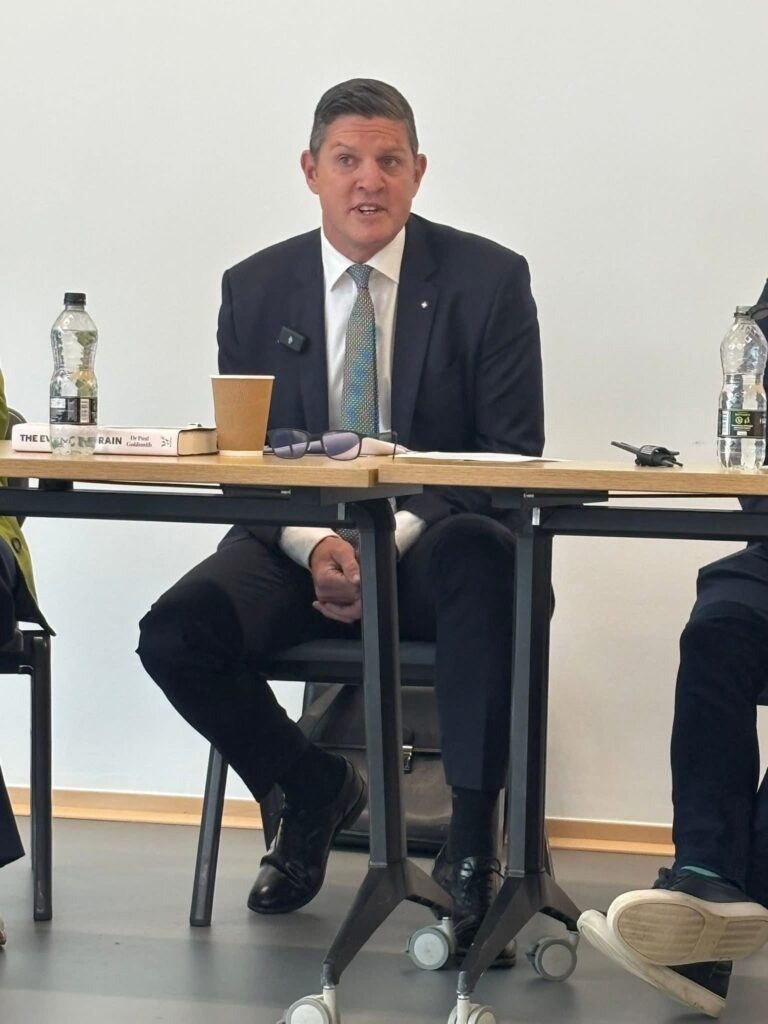
Speaking as chair of a True North think tank event in Newcastle, Daniel joined business leaders, academics and policymakers to discuss the growing number of young people who are not in education, employment or training (NEET) and the impact this could have on the region’s future prosperity.
The discussion came shortly after the publication of the first part of Alan Milburn’s latest report, which describes the current situation as a “national emergency”.
Speaking at the event, Daniel said: “It’s not simply a youth issue, it’s a challenge that affects every generation and has significant implications for our economy, our communities and the future workforce.”
Nationally, around one million people aged 16 to 24 are currently classified as NEET. That equates to around one in every eight young people.
Daniel highlighted the scale of the challenge, pointing to estimates that the economic impact of youth unemployment and inactivity now costs the UK around £125 billion each year through lost productivity and welfare spending.
However, the challenge is particularly acute in the North East. The region has the highest proportion of young people classified as NEET anywhere in the country, with around 53,000 young people aged between 16 and 24 currently not in education, employment or training. In Newcastle itself, the figure is estimated to be as high as one in four young people.
At the same time, unemployment in the North East remains higher than the national average, while educational attainment and skills development continue to lag behind many other parts of the country.
As the existing workforce ages and retires, businesses will increasingly rely on younger generations to fill skilled roles, support economic growth and contribute to public finances.
Daniel Harrison added: “If we do not get more young people into education, training and employment, we risk creating a situation where there simply are not enough skilled people coming through to replace those leaving the workforce.
“That affects businesses, public services and ultimately the long-term prosperity of the region.”
Despite the scale of the challenge, the event focused heavily on solutions.
A key theme throughout the discussion was the importance of creating clearer pathways into employment, particularly for young people who may struggle in traditional academic settings.
This is an issue the Harrison Foundation encounters regularly through its partnerships with schools, colleges and community organisations across the North East.
Through programmes delivered with organisations including Newcastle United Foundation, Foundation of Light and local schools, the Harrison Foundation supports young people who may be at risk of disengaging from education, helping them develop practical skills, gain qualifications and progress towards employment opportunities.

The discussion also explored the role that employers can play in addressing the challenge, including providing work experience, apprenticeships and early engagement opportunities for young people.
While the statistics presented during the event painted a concerning picture, there was also optimism that meaningful progress can be achieved through collaboration between education providers, employers, charities and policymakers.
The challenges facing the North East are significant, but so too is the opportunity. By helping more young people gain skills, qualifications and employment, the region can strengthen its workforce, support economic growth and create brighter futures for the next generation.
The goal of the Harrison Foundation is not simply to reduce unemployment, but to unlock potential, create opportunity and ensure more young people are able to contribute positively to their communities and the wider economy.